Choosing flex vs traditional industrial space in 2026 is no longer a simple rent comparison — it’s a strategic operating decision that impacts labor efficiency, scalability, and long-term cost control.
Across Denver and the Front Range, industrial inventory varies significantly by submarket, building age, and functionality. Newer bulk warehouse developments continue expanding inventory in outer corridors, while smaller-bay flex space in core infill locations remains competitive and selective.
The decision around choosing flex vs traditional industrial space should align with workflow, staffing structure, automation plans, and three-to-five-year operational goals — not just base rent.
Executive Summary
Choosing flex vs traditional industrial space in 2026 requires evaluating operational alignment first and financial terms second.
- Flex industrial space supports integrated office and warehouse use, moderate storage, and adaptable layouts.
- Traditional warehouse space prioritizes storage density, dock efficiency, and high-volume throughput.
- The wrong decision increases labor costs, retrofit expenses, and operational bottlenecks.
- The right decision improves efficiency, scalability, and long-term cost control.
Industrial leasing in 2026 is about total occupancy cost and operational performance — not just square footage.
Ultimately, choosing flex vs traditional industrial space requires aligning real estate decisions with operational strategy, not just lease economics.
PROBLEM: The Real Risk in Choosing the Wrong Industrial Space
The biggest mistake tenants make when choosing flex vs traditional industrial space is focusing on rent instead of operational functionality.
In Denver and the Front Range, bulk warehouse development has expanded inventory in outer corridors such as Brighton, DIA/Aerotropolis, and portions of the north I-25 industrial belt. At the same time, smaller-bay flex inventory in infill areas remains competitive.
Older industrial properties can present value opportunities, but functional obsolescence — lower clear heights, outdated loading configurations, limited power, inefficient truck circulation — can significantly impact productivity.
Tenants today are not just leasing square footage.
They are choosing operating infrastructure.
When choosing flex vs traditional industrial space incorrectly, businesses often experience:
- Inefficient workflows
- Higher labor costs
- Costly office retrofits
- Growth limitations
- Bottlenecks during peak demand
Industrial real estate is now an operational decision — not just a real estate decision.
Understanding Flex vs Traditional Industrial
Flex Industrial Space
What It Is
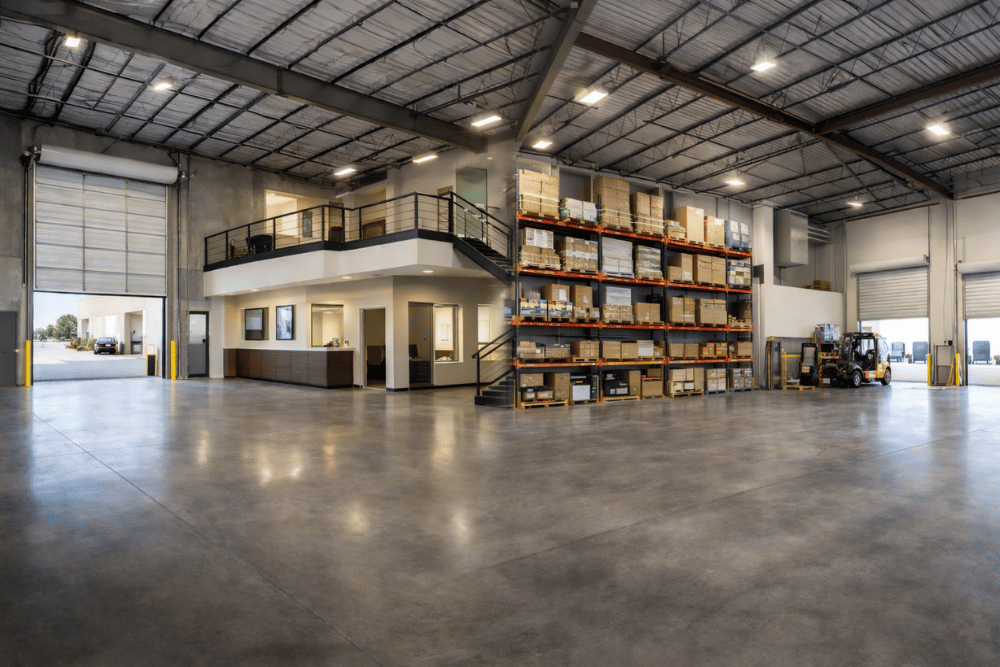
A hybrid industrial format combining warehouse storage with finished office, showroom, lab, or light manufacturing space.
Best For
- E-commerce operators
- Contractors with administrative teams
- Service-based industrial users
- Light assembly businesses
- Companies needing customer-facing areas
Advantages
- Built-in office infrastructure
- Adaptable layouts
- Lower upfront build-out requirements
- Strong staff and operations integration
Trade-Offs
- Often higher rent per square foot
- Less efficient for high-density pallet stacking
- Limited scalability for large distribution users
Flex prioritizes integration and adaptability.
Traditional Industrial Warehouse (Bulk Distribution)
What It Is
Warehouse-focused space optimized for bulk storage, logistics, or heavier manufacturing. Emphasizes clear height, dock efficiency, and large contiguous floor plates.
Best For
- High-volume logistics
- Regional distribution
- Large-scale storage users
- Manufacturing requiring dock flow
Advantages
- Efficient pallet stacking
- Lower rent per square foot at scale
- Optimized loading configurations
- Greater automation compatibility
Trade-Offs
- Office build-outs may require capital
- Less adaptable for hybrid operations
- Minimal finished space for staff-heavy teams
Traditional warehouse space prioritizes efficiency and throughput.
What’s Different in 2026?
Choosing flex vs traditional industrial space in 2026 requires deeper operational modeling due to four major factors:
1. Labor Efficiency
Workflow design often impacts cost more than rent. Travel distance, staging layout, and dock positioning directly influence productivity.
A cheaper lease that introduces friction may cost more over time.
2. Build-Out Costs
Office additions, HVAC upgrades, electrical modifications, and restrooms can materially change total occupancy cost.
Rent alone does not define value.
3. Growth Planning
Before choosing flex vs traditional industrial space, tenants must evaluate:
- Are we adding automation?
- Are we increasing administrative staff?
- Are we scaling fulfillment?
- Are we expanding product lines?
The lease should support the next three to five years.
4. Submarket Variability
Market conditions vary by location and building type:
- New bulk inventory expanding in outer submarkets
- Smaller-bay flex competitive in core infill areas
- Select older assets offering value if functionality aligns
There is rarely a universal answer.
ACTION: How to Make the Right Decision
When Flex Industrial Space Makes Sense
Flex is often the better choice when:
- You need integrated office + warehouse
- Your team interacts daily with inventory
- Operations are evolving
- Storage volume is moderate
- Customer access or showroom space matters
Flex supports adaptability and coordination.
When Traditional Warehouse Space Wins
Traditional warehouse space often makes more sense when:
- Storage density drives margins
- Dock flow efficiency is critical
- Clear height utilization matters
- Automation or scaling is planned
- Office space is secondary
Traditional supports operational intensity and scale.
At Warehouse Hotline, we start operationally — not financially.
Instead of asking, “What rent are you targeting?” we ask:
- How does your product move?
- How many people touch it?
- What does peak season look like?
- What breaks first in your workflow?
- Where do you want to be in three years?
Then we model:
- Operational fit
- Total occupancy cost
- Scalability
- Exit flexibility
Because the cheapest lease is rarely the smartest lease.
Strategic Takeaway for 2026
Choosing flex vs traditional industrial space is a strategic operating decision — not a commodity real estate choice.
Flex offers adaptability.
Traditional offers efficiency.
The right answer depends on how your business actually functions — not how the lease rate looks on paper.
In 2026, choosing flex vs traditional industrial space correctly can directly impact labor efficiency, scalability, and long-term profitability.
Next Steps for Tenants
When evaluating your options, choosing flex vs traditional industrial space thoughtfully ensures your warehouse aligns with workflow, growth plans, and operational efficiency.
Before signing an industrial lease:
- Map your workflow physically
- Estimate realistic build-out costs
- Model three-year growth
- Compare total occupancy cost
- Evaluate submarkets strategically
If you are choosing flex vs traditional industrial space in Denver or the Front Range, pressure-test the decision before committing.
The goal is not simply to lease space.
The goal is to strengthen operations and protect growth.
Why Functionality Drives Better Outcomes
Tenants who use a warehouse suitability checklist Denver to evaluate operational functionality alongside rent are more likely to avoid costly post-occupancy issues and workflow inefficiencies.
For example, a tenant may bypass a lower-rent building with limited clear height, insufficient electrical capacity, or poor dock flow in favor of a slightly higher-rent facility that better supports racking density, material-handling efficiency, and future automation upgrades. Over time, optimized operations often outweigh initial rent savings.
Applying a structured warehouse suitability checklist Denver allows tenants to compare properties based on performance, efficiency, and scalability, not just price.
Q1: What is the main difference between flex and traditional industrial space?
A1: Flex space integrates office and warehouse functions in one footprint. Traditional industrial space prioritizes storage density, dock efficiency, and throughput.
Q2: Is flex industrial space more expensive?
A2: Flex often has a higher rent per square foot due to finished office components. However, it may reduce build-out costs if you need integrated office space.
Q3: When should I choose traditional warehouse space?
A3: Traditional warehouse space is ideal when storage density, automation, and dock efficiency drive profitability.
Q4: Does choosing flex vs traditional industrial space affect labor costs?
A4: Yes. Workflow layout, travel distance, and dock configuration directly impact labor efficiency — sometimes more than rent does.
Q5: How far ahead should I plan when leasing industrial space?
A5: Most tenants should evaluate at least a three-to-five-year operational horizon before committing.
Follow Aviva and The Warehouse Hotline for exclusive insights, expert tips, and behind-the-scenes content on
- Website: The Warehouse Hotline
- Youtube: Aviva Real Estate
- TikTok: @avivarealestate
- X (Twitter): Aviva – Denver – Warehouse
- Facebook: Aviva Sonenreich’s Denver Commercial Real Estate | Warehouse Hotline
- LinkedIn: Aviva Sonenreich | Warehouse Hotline
- CRE Secrets: Spotify | Apple