Why Submarket Insight Matters More Than Headline Metrics
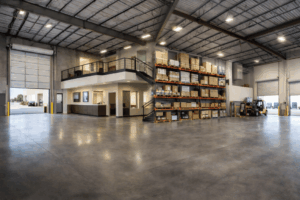
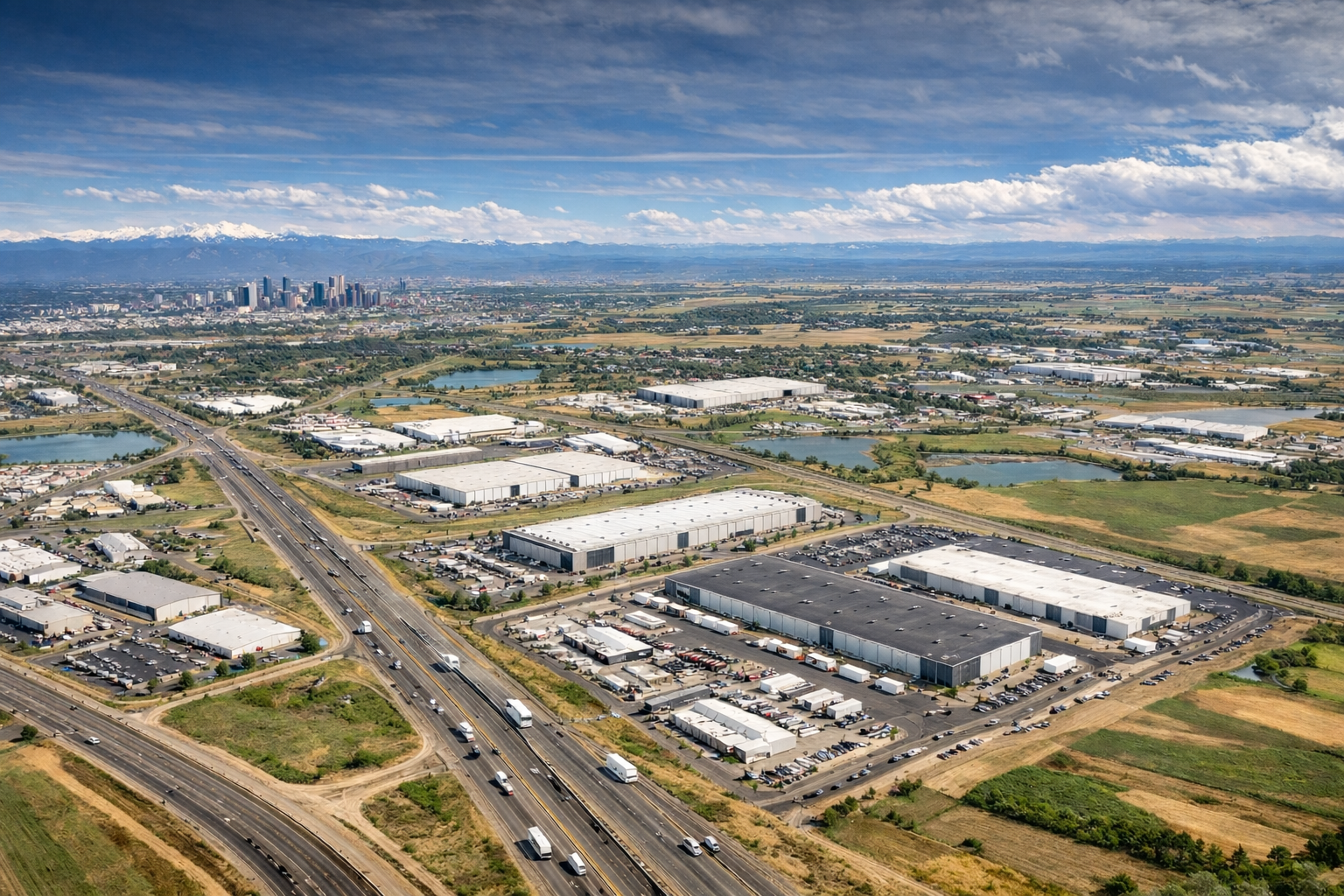
Industrial warehouse submarkets in Colorado are among the most active in the Mountain West, but they do not operate as a single, uniform market. Performance varies meaningfully by submarket, asset type, and operational use, and those differences have become more pronounced following recent construction cycles and evolving tenant priorities.
Tenants and investors evaluating industrial warehouse submarkets in Colorado often review the same market reports when comparing Denver, Brighton, and the northern Front Range, yet arrive at very different conclusions. The differentiator is not access to information, but how that information is interpreted at the submarket level.
A more accurate approach to understanding industrial warehouse submarkets in Colorado is to evaluate how each location functions operationally, rather than relying solely on metro-wide averages.
Core Themes Observed Across These Submarkets
1) Vacancy varies by product type, not just geography
Recent increases in overall vacancy across parts of the region are largely attributable to newly delivered bulk warehouse space. In contrast, functional, well-located assets, particularly small-bay, infill, and service-oriented buildings, often lease more efficiently. Headline vacancy metrics can mask these differences within industrial warehouse submarkets in Colorado.
2) Rent dynamics reflect proximity and utility
Lease rates continue to vary widely by location and building functionality. Core Denver and select North Metro and Brighton locations often command higher occupancy costs due to proximity to labor, population centers, and transportation infrastructure. In many cases, tenants offset these costs through operational efficiency and reduced downtime.
Northern Front Range markets typically offer greater pricing flexibility, with tradeoffs related to commute patterns, freight routing, or distance from major customer bases. These contrasts are a defining feature of industrial warehouse submarkets in Colorado.
3) Location tradeoffs are operational, not theoretical
Northern Front Range markets illustrate how industrial warehouse submarkets in Colorado provide land availability and scalability, yet function very differently than Denver core locations. Businesses must evaluate how location influences hiring, delivery timelines, customer access, and long-term growth plans, not just asking rent.
Without submarket-level insight, occupiers risk misalignment between space and operations, while investors risk misjudging demand durability.
A Functional Framework for Evaluating Industrial Submarkets
Rather than viewing industrial warehouse submarkets in Colorado strictly by geography, Denver and the Front Range are better understood as function-driven corridors:
- Infill & last‑mile markets: scarcity and proximity to end users
- Logistics and heavy distribution hubs: infrastructure capacity and throughput
- Airport‑oriented corridors: speed, air cargo access, and connectivity
- Transition or pressure‑relief markets: cost efficiency with regional access
- Expansion markets: flexibility, land availability, and scalability
Each submarket below aligns with one or more of these functional roles.
Core Denver Metro Industrial Submarkets
Denver Infill (Central Denver)
Commonly includes: Elyria‑Swansea, Globeville, South Platte River corridor, and portions of the central I‑70 area. Submarket boundaries may vary slightly by brokerage or data provider.
Defining characteristics
- Limited land availability and high barriers to new industrial development
- Strong demand for small‑bay, service‑oriented, and last‑mile industrial space
- Proximity to population centers, labor pools, and end users
Market insight: Infill industrial space tends to compete on location value and replacement difficulty rather than price alone. These constraints contribute to relatively consistent demand across market cycles, even as broader vacancy levels fluctuate within industrial warehouse submarkets in Colorado.
Commerce City
Commerce City is widely recognized as a logistics‑ and distribution‑oriented industrial submarket within the Denver metro.
Key attributes
- Direct access to I‑70, I‑76, and I‑270
- Rail‑served infrastructure and heavy‑industrial zoning
- Concentration of logistics, distribution, and outdoor storage uses
Market insight: Demand in Commerce City is closely tied to infrastructure capacity and freight efficiency, making it structurally distinct from infill or service‑driven submarkets.
Aurora
Aurora functions as a major east‑metro industrial corridor serving a broad range of users.
Common characteristics
- Access to Denver International Airport, I‑70, and E‑470
- Mix of bulk warehouse, flex industrial, and contractor‑oriented facilities
- Ongoing tenant interest driven by relative cost positioning within the metro
Market insight: Aurora often absorbs demand from users seeking Denver adjacency who are priced out of central infill locations. Its diversity of product types allows it to adapt as market conditions change across industrial warehouse submarkets in Colorado.
North Metro (Brighton / Thornton / Northglenn)
North Metro industrial areas share demand drivers with Denver’s core markets while maintaining distinct submarket dynamics.
Typical characteristics
- Strong owner‑user and small‑bay tenant demand
- Select corridors with limited new industrial development
- Appeal to service businesses, light industrial users, and regional operators
Brighton, in particular, is frequently evaluated as an alternative for users seeking north‑metro access while remaining connected to the Denver economy.
Market insight: North Metro submarkets often function as pressure-relief markets, accommodating demand that exceeds infill supply while maintaining regional connectivity. This positioning continues to differentiate these areas within industrial warehouse submarkets in Colorado.
Airport & I‑70 East Corridor
Industrial areas surrounding Denver International Airport and along the eastern I‑70 corridor are shaped primarily by transportation infrastructure and logistics requirements.
Key characteristics
- Newer bulk warehouse and logistics‑oriented product
- Appeal to regional and national distribution users
- Emphasis on truck access, air cargo proximity, and operational efficiency
Market insight Airport‑oriented industrial space competes on scale, speed, and infrastructure alignment, rather than proximity to population centers.
Northern Colorado: Flexibility and Expansion
Northern Front Range markets operate under a different set of drivers than Denver core and North Metro areas.
Common attributes
- Greater land availability and development flexibility
- Appeal to manufacturing, regional distribution, and specialized industrial uses
- Less dependence on daily proximity to central Denver
Market insight: Among industrial warehouse submarkets in Colorado, Northern Colorado competes primarily on flexibility and scalability. These markets are best suited for users whose logistics and labor models support a broader geographic footprint.
Market Signals and Observations
Recent activity across industrial warehouse submarkets in Colorado highlights several consistent patterns:
- Functionality over headline vacancy: Clear height, dock configuration, yard access, power capacity, and building adaptability often influence leasing outcomes more than metro‑wide averages.
- Operational proximity as a premium: Many tenants continue to prioritize access to labor, highways, and customers, even at higher occupancy costs.
- Selective capital deployment: Investment activity remains active but disciplined, with emphasis on asset quality, tenant durability, and submarket fundamentals.
- Diverse tenant demand: Logistics, last‑mile delivery, light manufacturing, contractor services, and temperature‑controlled storage continue to contribute to absorption.
Forward‑looking observations reflect prevailing market sentiment and should be interpreted as directional rather than predictive.
How to Use This Insight
For tenants: Evaluate industrial warehouse submarkets in Colorado through an operational lens, not just asking rent, to better align space with business needs and growth plans.
For investors: Prioritize submarket function, asset versatility, and infrastructure alignment when assessing opportunities across industrial warehouse submarkets in Colorado.
Q1: Which submarkets are seeing the strongest demand?
A1: Core Denver infill areas, Brighton/North Metro corridors, and select northern Front Range markets—each for different operational reasons.
Q2: Are vacancy rates low everywhere?
A2: Vacancy varies by location and product type. Functional small-bay space often performs differently than bulk or newly delivered assets.
Q3: What industries are driving leasing?
A3: Logistics, last-mile delivery, light manufacturing, contractor services, and temperature-controlled storage.
Q4: Are lease rates still increasing?
A4: Rent growth has moderated but remains resilient in high-demand locations; outer corridors are generally more cost-competitive.
Q5: How should investors identify high-potential assets?
A5: By analyzing submarket function, infrastructure access, asset specifications, and tenant demand rather than relying solely on metro-wide averages across industrial warehouse submarkets in Colorado.
Follow Aviva and The Warehouse Hotline for exclusive insights, expert tips, and behind-the-scenes content on
- Website: The Warehouse Hotline
- Youtube: Aviva Real Estate
- TikTok: @avivarealestate
- X (Twitter): Aviva – Denver – Warehouse
- Facebook: Aviva Sonenreich’s Denver Commercial Real Estate | Warehouse Hotline
- LinkedIn: Aviva Sonenreich | Warehouse Hotline
- CRE Secrets: Spotify | Apple
Sources: