
The Hidden Risks Behind Tenant-Buy Warehouse Deals
Transitioning from leasing to owning a warehouse is a major strategic move, especially in Denver. Tenant-buy warehouse Denver transactions often fail or underperform due to overlooked risks including:
- Outdated or incomplete environmental assessments that may hide contamination liabilities.
- Underestimated deferred maintenance and capital expenditure (CapEx) needs.
- Zoning restrictions that limit operational flexibility or expansion potential.
- Market overexposure and pricing volatility, especially in high-demand industrial hubs like Denver.
Despite continued strong demand in industrial real estate across major U.S. markets, rising purchase prices and tighter financing conditions exacerbate risks. Without a comprehensive risk management plan, tenants can face costly surprises post-acquisition such as appraisal shortfalls, unexpected environmental remediation, or expensive structural repairs.
Frequently, tenants report after closing:
“Did we just buy a building or a long-term liability?”
A Practical Framework for Smarter Warehouse Purchases
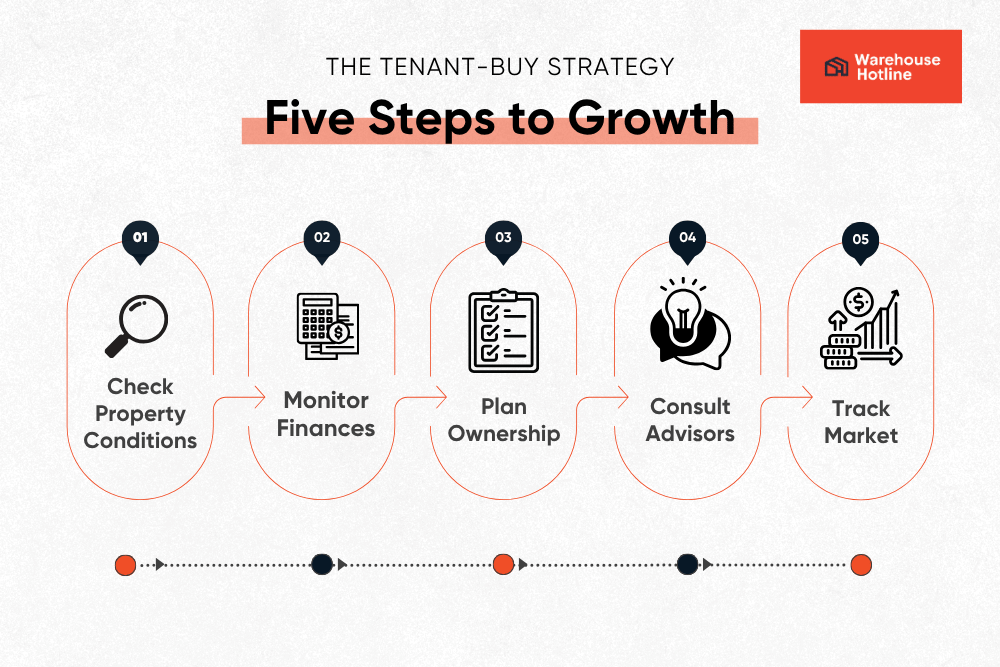
Effective risk management isn’t about eliminating risk — it’s about anticipating, quantifying, and mitigating it. Leading CRE brokers recommend the following five-step framework for a tenant-buy warehouse Denver approach:
- Comprehensive Due Diligence
- Complete Phase I and Phase II Environmental Site Assessments (ESAs) to evaluate contamination risk per ASTM standards.
- Verify zoning compliance early to ensure intended property use is permissible.
- Conduct professional building inspections focused on deferred maintenance such as roofing, electrical, HVAC, and foundation conditions beyond surface-level walk-throughs.
- Financial Stress Testing
- Model financing scenarios for a tenant-buy warehouse Denver, including potential interest rate increases (e.g., +1%), to assess impact on debt service coverage ratio.
- Simulate vacancy periods (e.g., 3-6 months) to evaluate cash flow resilience.
- Budget realistic CapEx and insurance cost escalations annually to avoid surprises.
- Tenant-to-Owner Transition Planning
- Prepare for increased ownership expenses when acquiring a tenant-buy warehouse Denver, including property taxes, insurance, repairs, and compliance costs.
- Maintain a lease-ready mindset to facilitate future subleasing or resale if necessary.
- Establish capital reserves specifically for long-term property upkeep.
- Engage Dual-Role Advisors
- Work with brokers or consultants experienced in both tenant representation and industrial investment.
- Leverage their insight on local market comparables, deal structures, and negotiations to balance operational needs with financial goals.
- Market Timing and Local Expertise
- Monitor local industrial cycles and demand-supply dynamics, especially in key markets such as Denver, Dallas, and Phoenix.
- Use rising vacancy or softening demand as leverage to negotiate better purchase terms.
How Tenant-Buy Strategy Creates Measurable Value
Many Denver-based manufacturers and logistics firms have successfully transitioned from leasing to ownership after years in their facilities. Brokers from The Warehouse Hotline report that tenant-buy warehouse Denver deals often deliver operational and financial advantages because tenants already know the property and can reduce downtime during the transition.
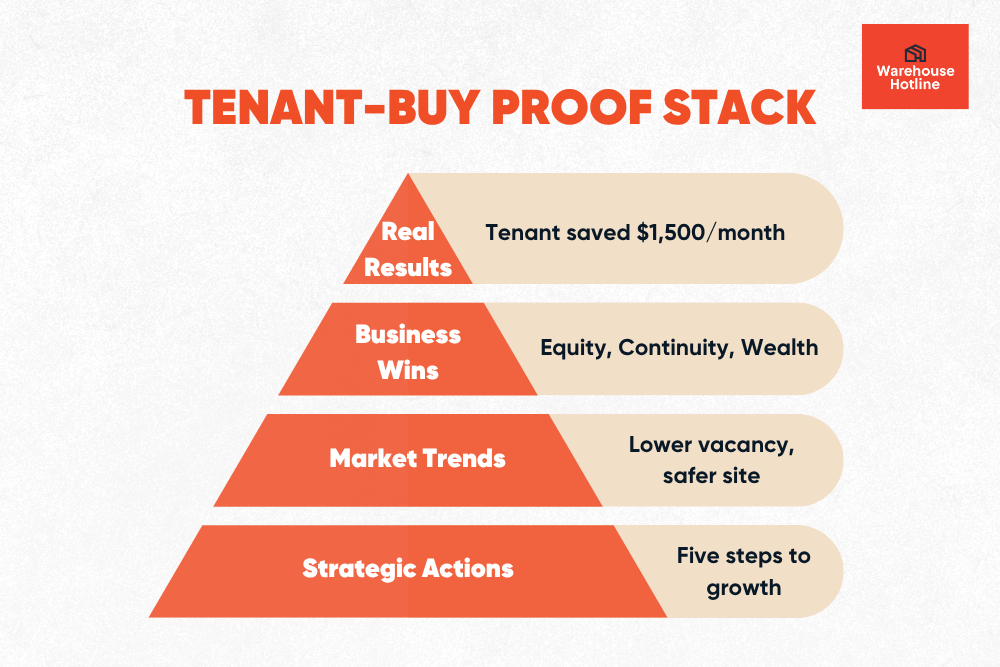
One client who pursued a tenant-buy warehouse Denver strategy illustrates this clearly. After years of leasing, rising rent had become a significant expense. By applying thorough due diligence and financial planning — the first steps in our five-step framework — the client identified a warehouse that fit their operations while lowering monthly ownership costs by roughly $1,500 compared with previous rent.
This disciplined approach unlocked multiple long-term benefits:
- Reduced Overhead: Total monthly ownership costs — mortgage, taxes, insurance, and reserves — came in below prior rent.
- Equity Growth: Each payment now builds value in a tangible asset rather than disappearing as rent.
- Long-Term Wealth Creation: Property appreciation adds another layer of financial upside over time.
- Operational Continuity: Familiarity with the property minimized downtime during the transition.
Across the market, tenant-buy acquisitions tend to have lower early-stage vacancy, and conducting Phase II environmental testing before closing helps reduce potential remediation risks.
This example demonstrates how strategic tenant-buy warehouse Denver planning converts operational costs into controllable, long-term value, mitigates financial and operational risk, and provides measurable advantages for tenants moving into ownership.
Actionable Step: Conduct a Tenant-Buy Risk Audit Before Purchase
Before signing any purchase agreement for a tenant-buy warehouse Denver, start with a Tenant-Buy Risk Audit — a structured evaluation that builds on the strategies proven in the proof example:
- Physical & Environmental Assessment: Inspect the building thoroughly and conduct Phase II testing to reduce potential remediation risks.
- Financial Alignment: Stress-test financing scenarios and compare ownership costs to current rent.
- Operational Continuity Planning: Ensure the property supports current operations and minimizes transition downtime.
- Exit Strategy Analysis: Plan for potential resale, subleasing, or long-term ownership flexibility.
By following this risk audit process — the same disciplined approach that helped our Denver client reduce costs and build long-term value — tenants can move from reactive leasing to strategic ownership with confidence and measurable results.
Q1: What is a tenant-buy warehouse Denver strategy?
A1: A tenant-buy strategy allows a business that’s leasing industrial space to purchase the same or a similar property for long-term control and equity growth.
Q2: What are the main risks in warehouse purchases?
A2: Environmental contamination, financing volatility, deferred maintenance, and overvaluation are top risks for tenant-buy warehouse deals.
Q3: How can I mitigate risk when buying a warehouse?
A3: Perform detailed due diligence, stress-test your financing, plan ownership costs, and work with brokers experienced in tenant-buy transactions.
Q4: Is now a good time to buy an industrial warehouse?
A4: In many U.S. markets, cooling demand and stabilized prices are creating opportunities — especially for tenants with long-term operational needs.
Q5: What’s the biggest advantage of tenant-buy ownership?
A5: Control. You can build equity, stabilize costs, and tailor the property to your exact operations without landlord restrictions.
Follow Aviva and The Warehouse Hotline for exclusive insights, expert tips, and behind-the-scenes content on
- Website: The Warehouse Hotline
- TikTok: @avivarealestate
- X (Twitter): Aviva – Denver – Warehouse
- Facebook: Aviva Sonenreich’s Denver Commercial Real Estate | Warehouse Hotline
- LinkedIn: Aviva Sonenreich | Warehouse Hotline
- CRE Secrets: Spotify | Apple
Sources
- ASTM International – Phase I ESA Standard (E1527-21)
- EPA – Environmental Site Assessment & Brownfields Guidance
- National Association of Realtors – Commercial Real Estate Market Insights
- CBRE – U.S. Industrial & Logistics Market Report