

Thinking of Selling Your Commercial Property? Don’t Let the IRS Take 30%
If you’re preparing to sell a commercial or industrial property, the capital gains tax can feel like a punch to the gut. You’ve built equity and now you’re ready to reinvest—but the IRS wants a sizable cut.
That’s where a 1031 exchange comes in. It’s one of the most powerful (and underused) tools available to commercial real estate investors.
The catch? You need to follow the IRS’s rules precisely—or risk losing the tax deferral altogether.
What Is a 1031 Exchange—and Why It Matters
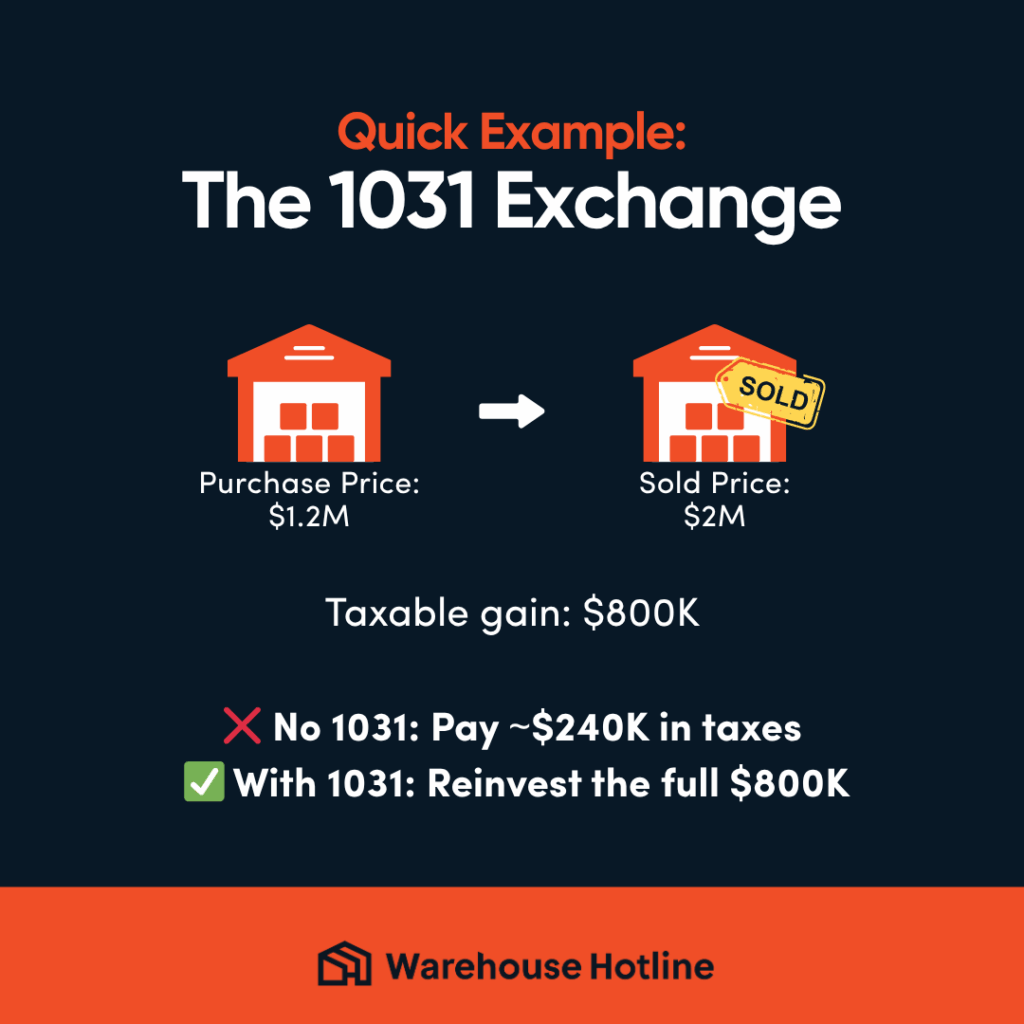
A 1031 exchange, named after IRS Code Section 1031, lets you defer capital gains taxes when you sell one property and reinvest in another of like-kind.
That can mean deferring 20–40% in taxes—freeing up more capital to scale your portfolio or reinvest in better cash-flowing assets.
The Hidden Risk: The IRS’s Strict Timeline
This is where most investors get tripped up.
Key 1031 Rules to Know:
- 45-Day Rule: You must identify your replacement property within 45 days of closing your sale.
- 180-Day Rule: You must close on the new property within 180 days.
- Qualified Intermediary: You can’t touch the funds between selling and buying. A third party must hold them.
Miss one step, and you lose the tax benefits.
We help manage the timeline, paperwork, and sourcing—so you don’t miss a beat.
What Counts as “Like-Kind” Property?
The term “like-kind” might sound limiting, but it’s actually quite flexible.
You can exchange:
- A warehouse for another warehouse
- A flex building for a distribution center
- Industrial land for a multi-tenant industrial asset
What matters is the use of the property—not the exact asset class.
📌 Pro Tip: Raw land, warehouses, industrial condos, and even NNN-leased assets can qualify.
Need help finding a replacement property?
That’s part of what we do.
How We Help with 1031 Exchanges
At the Warehouse Hotline, we support investors through every step of the 1031 process:
- Deal structuring advice
- Market analysis and property sourcing
- Timeline tracking and deadline management
- Referral to vetted Qualified Intermediaries
- Contingency planning if a deal falls through
Key Takeaways: Defer Taxes. Reinvest Smarter. Grow Faster.
A 1031 exchange isn’t just a tax loophole—it’s a growth strategy. But it only works if done correctly, and the IRS doesn’t allow for do-overs.
Whether you’re in the early planning stages or already under contract, we can help you:
- Protect your profits
- Source smart reinvestment options
- Comply with every IRS rule along the way
Let’s protect your gains—and grow your portfolio with purpose.