
How Mispricing Your Denver Warehouse Could Quietly Drain Thousands From Your Income—Without You Even Knowing It
Your Denver warehouse lease rate could be quietly haunting your income—and you might not even know it.
In today’s market, mispricing your warehouse rent isn’t just a simple mistake—it’s a profit-killer that silently drains thousands from your bottom line each year. Whether your rate is too high or too low, ignoring real-time market data can summon the ghosts of lost revenue, long vacancies, and declining property value.
Problem: The Hidden Haunting of Your Denver Warehouse Lease Rate
Some ghosts aren’t lurking inside your building—they’re haunting your bank statements.
When your Denver warehouse lease rate is based on outdated comps, rumors, or “neighbor talk,” you invite invisible losses month after month. Many owners don’t even realize they’ve been undercharging or overpricing until the damage is done.
Beware the financial frights:
- Phantom rents: Charging at yesterday’s rates means your current tenants pay more—just not to you.
- Cursed comps: Misleading online averages cloak the true asking rent range of $11–$13 per square foot.
- Silent drain: Even a small underpricing error can quietly erase tens of thousands in annual income — and depress your future appraisal value.
- Ghastly vacancies: Set your price too high, and your warehouse transforms into a ghost town—empty, eerie, and forgotten by hopeful tenants.
The true horror? Most owners don’t realize they’re bleeding profit until the losses have already buried their balance sheet.
The Haunting Costs of Inaction: What Happens If You Ignore Your Warehouse Rent?
Failing to confront the haunting issue of mispriced Denver warehouse lease rate isn’t harmless—it’s the kind of quiet curse that drains profits, scares away good tenants, and erodes property value without a sound.
Here’s what these ghostly warning signs look like—and the chilling consequences they bring:
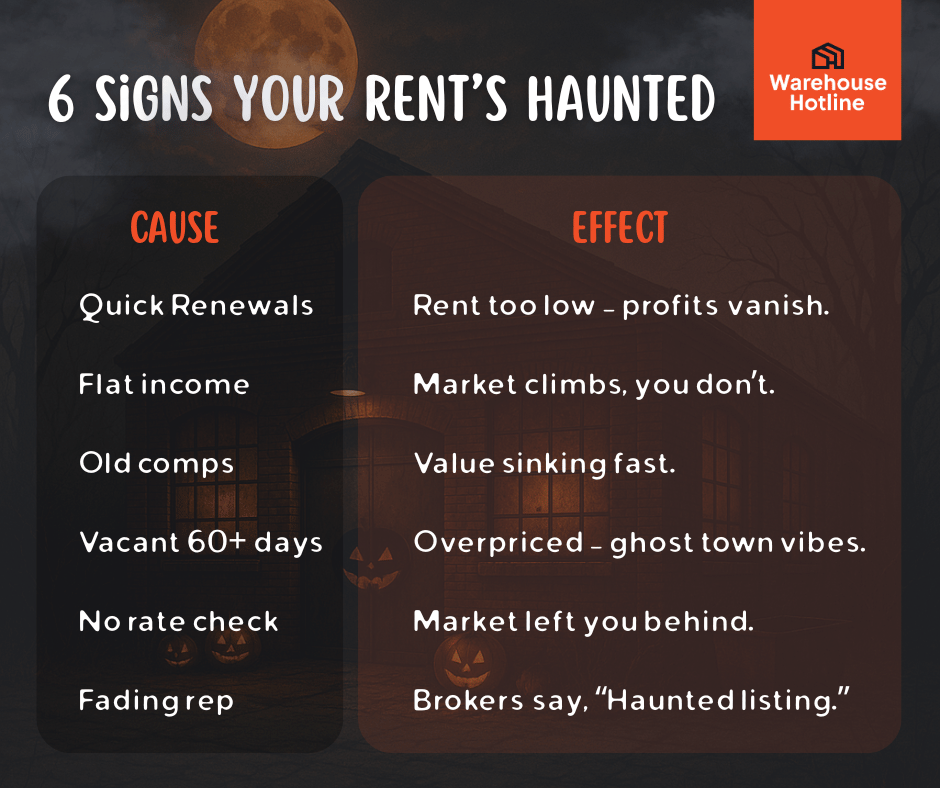
1. Tenants Renew Too Quickly → You’re Undercharging
Cause: Tenants rush to lock in renewals before you realize how far below market your rent is.
Effect: You lose thousands in unrealized rent each year. Every “easy renewal” might actually be a red flag that your space is priced too low
2. Income Flat Despite Rising Demand → Invisible Income Erosion
Cause: Market rents rise across Denver, but your warehouse income stays eerily stagnant.
Effect: Your property becomes a financial ghost—bleeding opportunity while competitors collect higher returns. Over time, this gap compounds into tens of thousands in lost equity.
3. Outdated Comps Still Guiding Your Pricing → Property Devaluation
Cause: Using last year’s data or neighbor talk to set your Denver warehouse lease rate invites appraisal damage.
Effect: Appraisers and investors see your low rents as warning signals. Your property’s value sinks, refinancing becomes harder, and your asset’s reputation fades into the shadows.
4 Empty Space for Over 60 Days → Tenant Turnover Horrors
Cause: Either your rent is set too high or your features don’t match the price.
Effect: Prolonged vacancies drain cash flow, invite bargain-seeking tenants, and destabilize long-term income. What used to be a premium warehouse becomes a ghost town of missed opportunities.
5. No Lease Rate Review in 6+ Months → Competitive Disadvantage
Cause: You’ve let your pricing stagnate in a rapidly shifting market.
Effect: Other owners adapt quarterly while your warehouse fades from brokers’ radars. To tenants, it looks haunted—stuck in the past, overpriced for its value, and unworthy of a tour.
6. Market Reputational Damage → The Final Curse
Cause: Years of unclear pricing, outdated rates, or inconsistent communication.
Effect: Brokers whisper, tenants hesitate, and your listings go cold. You become the “haunted house” of Denver’s industrial market—avoided, overlooked, and undervalued.
Ignoring these warning signs doesn’t make them vanish—it only deepens the spell.
Each month of inaction costs more than lost rent; it weakens your property’s position in the market.
If your warehouse rent hasn’t been reviewed recently, you may already be haunted by lost income.
It’s time to lift the curse—and take back control of your warehouse’s true market value.
Solution: Exorcise the Guesswork with Data
To vanquish these pricing ghosts, you need more than superstition—you need hard numbers.
Here’s your sacred ritual to break the curse and resurrect your rental income:
Benchmark expertly:
- According to CBRE and CommercialEdge, the Denver warehouse lease rate currently ranges $7 to $14 per SF annually, depending on submarket, building class, and property features. Class A properties near I-70 or I-25 often hit $13–$14/SF.
Know your property’s magic and monsters:
- Blessings: 24’+ clear heights, modern docks, corner access, and energy-efficient lighting.
- Burden: Aging HVAC, limited truck courts, or tricky access routes.
- Adjust your pricing to reflect these realities — don’t undercharge for what adds value, and don’t ignore what drags you down. (Related Topic: 5 Proven Ways Warehouse Owners Can Boost Value and Cut Vacancy)
Transparency is your protection spell.
- List all-in pricing — base rent, CAM, utilities, and insurance — upfront. Tenants fear hidden fees more than high rent. (See related topic: The Hidden Cost to Lease Industrial Space in Denver in 2025)
Screen prospects with care:
- Qualify interested tenants before showings to avoid wasting time on ghost leads. While tenant screening helps filter serious prospects, it does not guarantee final lease execution.
Revisit rates like clockwork.
- Reassess your Denver warehouse lease rate every three months to stay in sync with shifting market forces.
Proof: The Market Never Lies (Even When It’s Spooky)
Here are the eerie facts lurking in the Denver industrial shadows:
- Average Denver warehouse lease rate as of 2025 is approximately $11.61 per SF annually.
- Class A warehouses near major corridors I-70 and I-25 can command $13–$14/SF.
- National average hover around $9/SF, meaning Denver owners have a supernatural advantage commanding 20–30% higher rents.
- Vacancy rates are grave threats: One empty month can represent roughly 8–10% of annual rental income loss.
These market truths don’t spook—they illuminate. Owners who rely on verified data and shed outdated pricing myths can resurrect substantial profits instead of watching income vanish into the abyss.
But numbers aren’t the only things haunting this story—real-world missteps often tell the scariest truths.
Real-Life Haunted Rent Story: The Costly Curse of Mispricing
In Denver’s industrial market, Aviva Sonenreich and her team at The Warehouse Hotline often step in after owners have already been haunted by pricing mistakes. They’ve seen how quickly good properties can lose value when rates don’t align with the market.
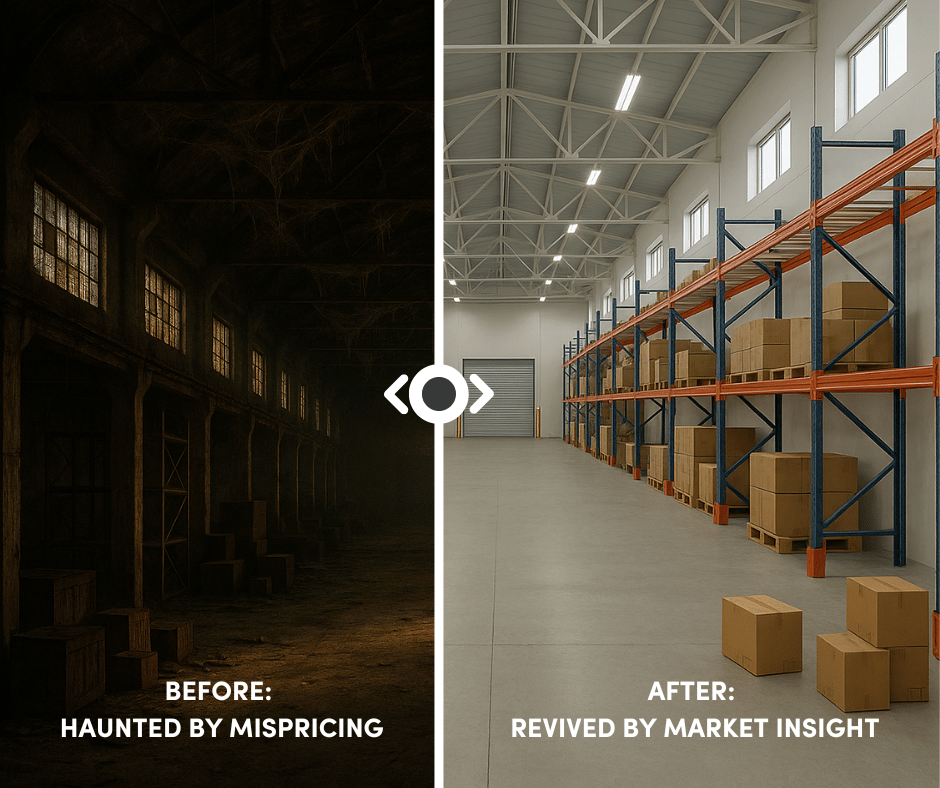
In one case, a warehouse owner set their rent far above market expectations, assuming tenants would “bite eventually.” Instead, weeks turned into months with little serious interest. The longer it sat, the more brokers and buyers began to wonder—why hasn’t it leased yet? That perception alone caused the property’s value to decline. What began as a confident listing ended as a cautionary tale about opportunity cost.
In another instance, a business owner sold their company and agreed to a sale-leaseback—but locked in a rent well below market. When it came time to sell the property itself, investors valued it based on the underpriced lease income, not its true potential. The result: a permanent reduction in resale value that could have been avoided with better guidance.
The Warehouse Hotline helps owners avoid these costly traps by grounding every lease strategy in real market data. Whether it’s avoiding the chill of overpricing or the slow drain of undervaluing your space, the lesson is clear:
The takeaway? Your Denver warehouse lease rate determines whether your asset thrives—or turns into a financial ghost story.
Action: Stop the Financial Haunting Before It Spreads
Before your next lease cycle begins, grab your flashlight and follow this checklist to keep profits alive and thriving:
- Audit your property — document square footage, location, and amenities—know your fortress inside out and any recent upgrades.
- Compare 3–5 active listings within five miles to gauge fair market positioning.
- Set your base rent aligned with the local average ($11.61/SF), then adjust for your property’s unique strengths and weaknesses.
- Disclose all costs — no hidden fees, no tricks, to avoid tenant surprises.
- Track tenant interest monthly if demand surges, don’t be afraid to raise rates by 3–5%.
Your Denver warehouse lease rate is more than a number—it’s a reflection of your property’s health, competitiveness, and long-term equity.
Don’t let outdated pricing drain your profits or haunt your balance sheet.
Lift the curse. Use data. And bring your warehouse value back to life.
Q1: What’s the average Denver warehouse lease rate in 2025?
A1: Between $11–$12 per SF annually, depending on submarket and building class.
Q2: Why is pricing my warehouse rent correctly so important?
A2: Underpricing bleeds thousands in lost rent; overpricing triggers prolonged vacancies.
Q3: How often should I review my warehouse lease rate?
A3: Every 3 to 6 months to stay current with market shifts.
Q4: What factors drive higher warehouse rents in Denver?
A4: Proximity to logistics hubs, high ceilings, modern docks, and energy-efficient upgrades.
Q5: Where can I find verified Denver warehouse lease comps?
A5: Check CBRE, Colliers, LoopNet, and CommercialEdge for up-to-date data.
Follow Aviva and The Warehouse Hotline for exclusive insights, expert tips, and behind-the-scenes content on
- Website: The Warehouse Hotline
- TikTok: @avivarealestate
- X (Twitter): Aviva – Denver – Warehouse
- Facebook: Aviva Sonenreich’s Denver Commercial Real Estate | Warehouse Hotline
- LinkedIn: Aviva Sonenreich | Warehouse Hotline
- CRE Secrets: Spotify | Apple | Website