
Commercial Lease Location: Why Your First Decision Matters
A commercial lease location can make or break your business. Choosing the wrong site triggers operational delays, rising labor issues, and unexpected costs that compound over time.
High Stakes of Choosing the Wrong Location
Selecting a commercial lease location is one of the most critical decisions a tenant can make. The wrong location creates a domino effect across your entire operation:
Challenges include:
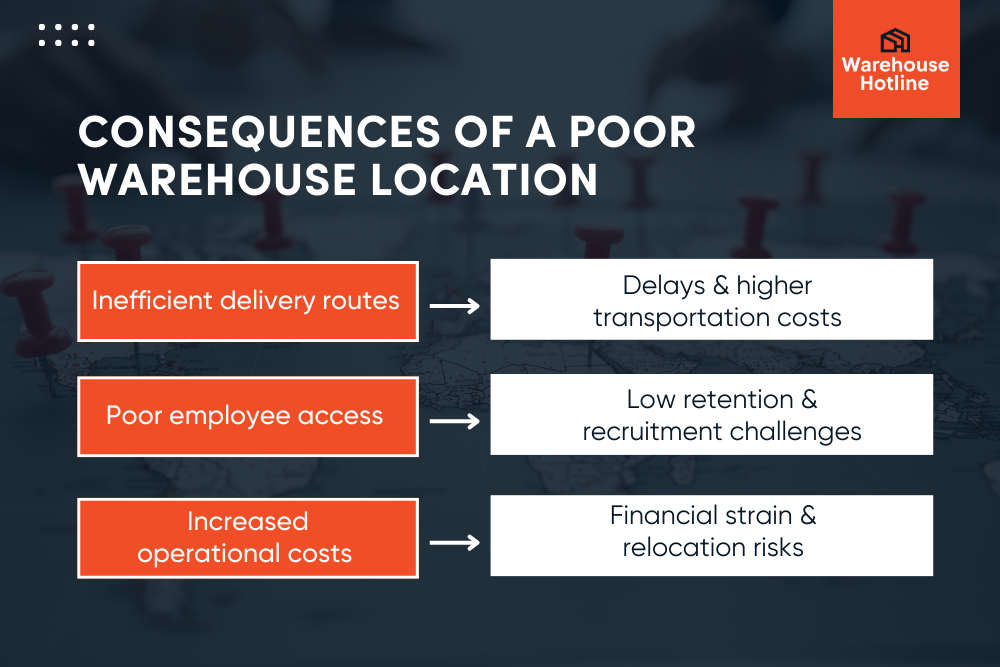
- Inefficient delivery routes and congestion
- Poor employee access and labor retention issues
- Increased operational costs and potential relocation
Choosing the wrong warehouse location can create cascading operational and financial challenges
How Tenants Avoid Commercial Lease Location Mistakes
Avoiding costly errors starts with a strategic, data-driven approach to commercial lease location selection.
Choosing the right location requires a strategic, holistic approach. Aviva, founder of The Warehouse Hotline, emphasizes:
“A warehouse is not just space; it’s the foundation of your operations. Tenants need to assess accessibility, workflow, labor, and market proximity simultaneously. The right decision reduces operational risk and sets up your business for efficiency and scalability.”
Key strategies tenants should follow:
- Use expert guidance – Tenant representation professionals provide insights on lease terms, operational efficiency, and strategic location evaluation
- A Practical Framework for Smarter Warehouse Purchases
- Analyze delivery and commute routes – Check truck access and employee routes for potential bottlenecks.
- Evaluate market access and scalability – Consider proximity to suppliers, customers, and future expansion.
- Check infrastructure and compliance – Ensure proper loading access, utilities, zoning, and technology integration.
- Incorporate workforce considerations – Access to qualified labor, commute ease, and retention risk matter.
Evidence That the Solution Works
Research and real-world experience show that following these strategic approaches prevents costly mistakes:
- Operational efficiency: Warehouses with good truck access, market proximity, and proper layout reduce delivery delays and transportation costs. (Warehouse Freight Trip Generation Models; urban logistics studies)
- Labor retention and productivity: Locations closer to residential areas or public transit improve workforce retention and reduce recruitment/training costs.
- Internal operational flow: Strategic site selection avoids bottlenecks, allows optimal layouts, and supports technology adoption.
Real-life example:
An e-commerce tenant picked a warehouse near highways assuming fast logistics. After move-in, congestion, poor loading access, and labor commute issues led to higher transportation and staffing costs. After reassessing their needs and relocating to a strategically evaluated site, they reduced delays, improved workforce stability, and lowered operational expenses.
Industry research supports that accessibility, market reach, workforce proximity, and land cost are the top determinants of successful warehouse location planning.
Make Location Decisions Strategic
To avoid relocation, inefficiencies, and unnecessary costs:
- Conduct operational and market audits before signing any lease.
- Evaluate long-term scalability, supply chain efficiency, and workforce access.
- Work with experienced tenant representatives to identify hidden risks and negotiate favorable lease terms.
- Use technology and data-driven tools to model delivery efficiency, internal workflow, and cost implications.
Choosing the right commercial lease location now protects your business later.
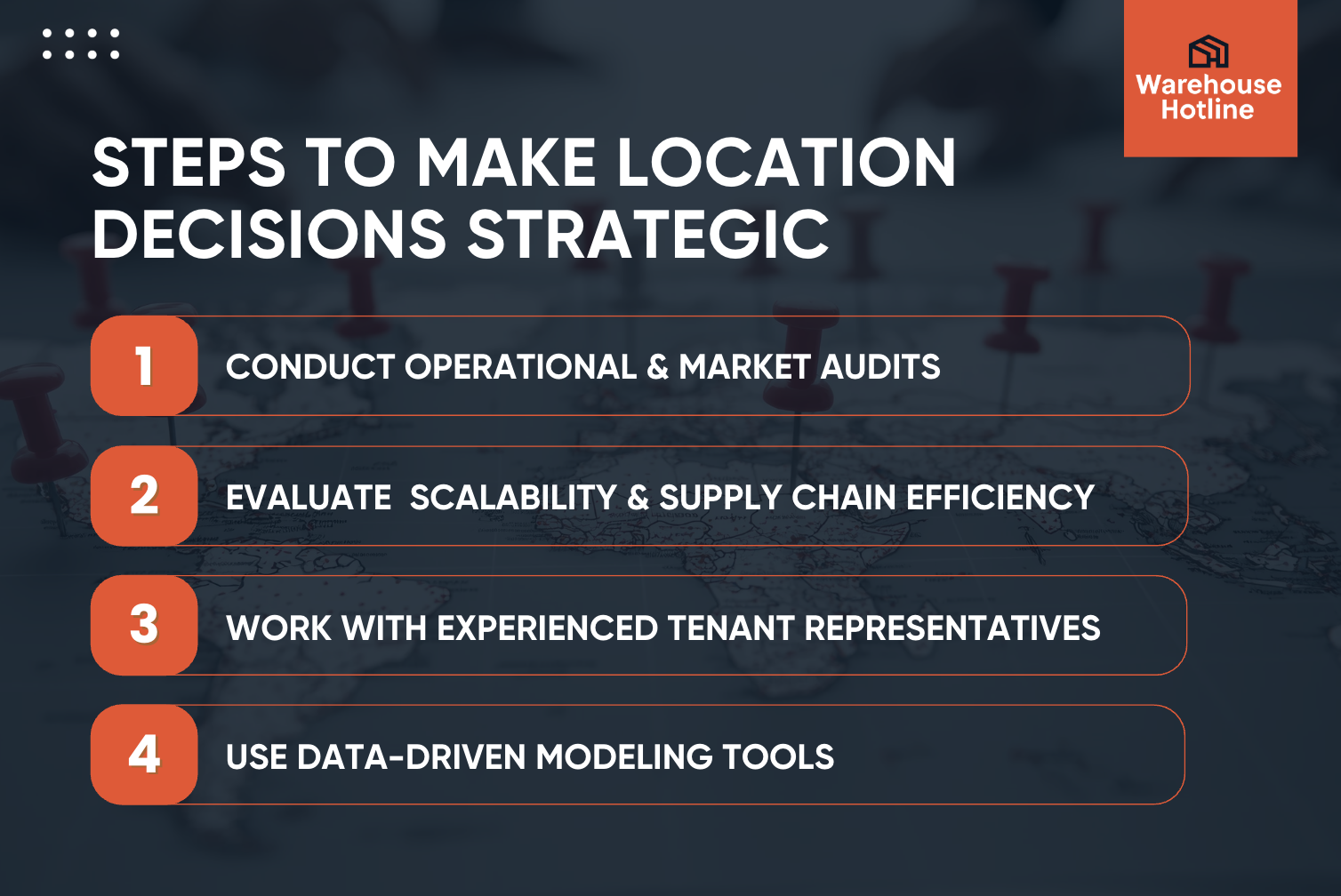
Following these steps ensures tenants avoid costly relocations, labor issues, and operational inefficiencies.
Conclusion
A poor commercial lease location can trigger cascading issues—from labor loss to operational slowdowns and financial strain. But all of these risks are preventable.
By conducting thorough due diligence, incorporating operational data, and consulting experts like The Warehouse Hotline, tenants can select the right site, mitigate risks, and optimize operational efficiency, setting themselves up for long-term success.
For guidance on selecting a warehouse that supports your operations, contact The Warehouse Hotline to consult with experts who specialize in strategic warehouse placement, lease analysis, and operational optimization.
Q1:What is the most important factor in choosing a commercial lease location?
A1: Accessibility—both for trucks and employees—is the most critical factor because it directly impacts delivery speed, labor retention, and daily operations.
Q2: How does a commercial lease location affect labor costs?
A2: If the site is far from workforce hubs or transit routes, commute difficulty increases turnover and recruitment costs.
Q3: What hidden costs come from choosing the wrong warehouse location?
A3: Common hidden costs include lost productivity, higher transportation expenses, workflow bottlenecks, and eventual relocation.
Q4: Should tenants rely on online listings for choosing a commercial lease location?
A4: No. Listings lack operational context—site visits, traffic flow analysis, and expert evaluation are essential.
Q5: How can tenant reps help with commercial lease location decisions?
A5: Tenant reps identify risks that businesses often overlook—zoning issues, layout problems, access limitations, and unfavorable lease terms—saving time and money.
Follow Aviva and The Warehouse Hotline for exclusive insights, expert tips, and behind-the-scenes content on
- Website: The Warehouse Hotline
- Youtube: @avivarealestate
- TikTok: @avivarealestate
- X (Twitter): Aviva – Denver – Warehouse
- Facebook: Aviva Sonenreich’s Denver Commercial Real Estate | Warehouse Hotline
- LinkedIn: Aviva Sonenreich | Warehouse Hotline
- CRE Secrets: Spotify | Apple